


2nd item 15% off · 3rd item 20% off
Come Back & Save
2nd order 15% off · 3rd order & beyond 20% off
Savings are shown as one discount across your cart. Offers can't be combined; you'll automatically get the best one. Use the same email each time you check out (or sign in) to unlock returning-customer savings.
Squirrel-Proof Metal Bird Feeder
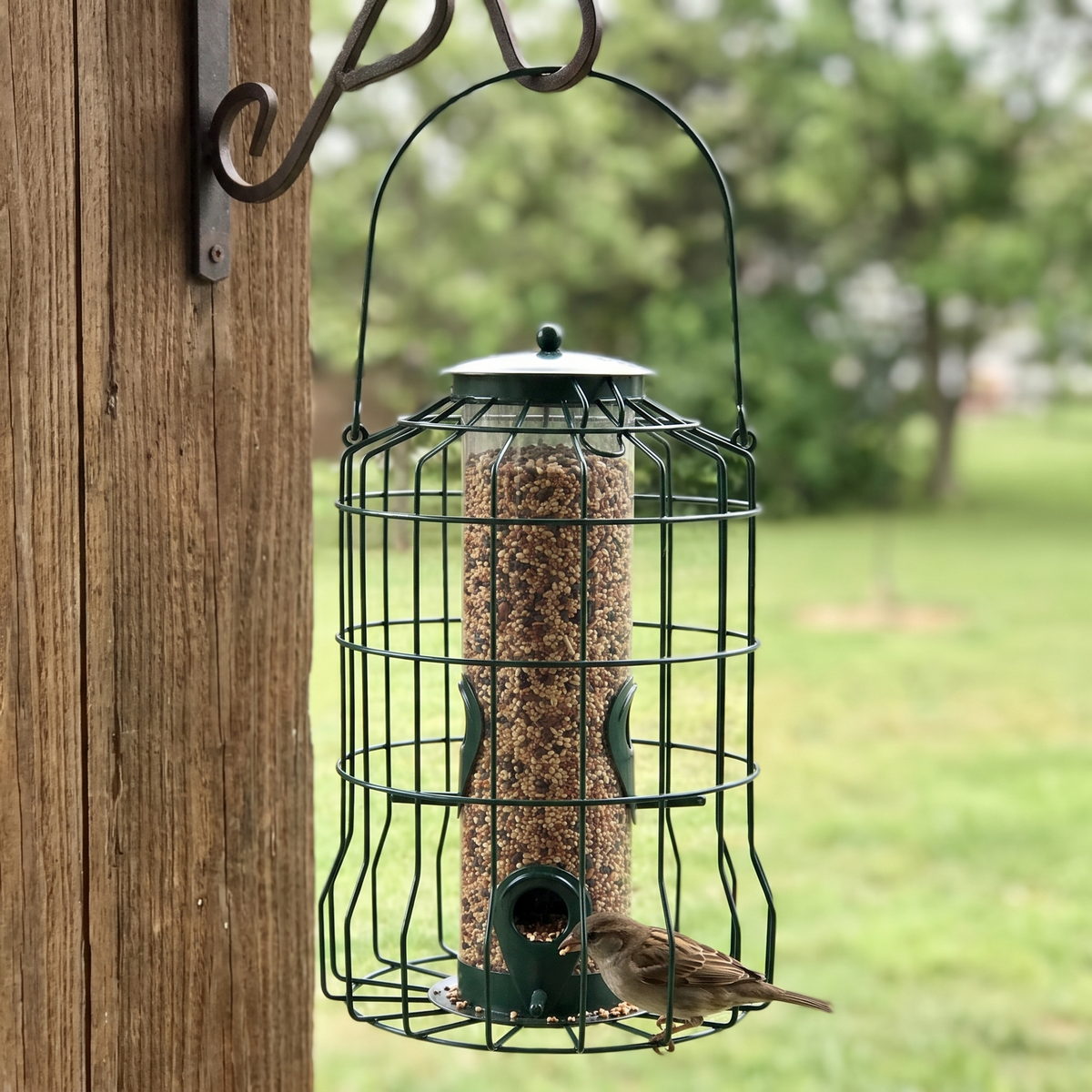
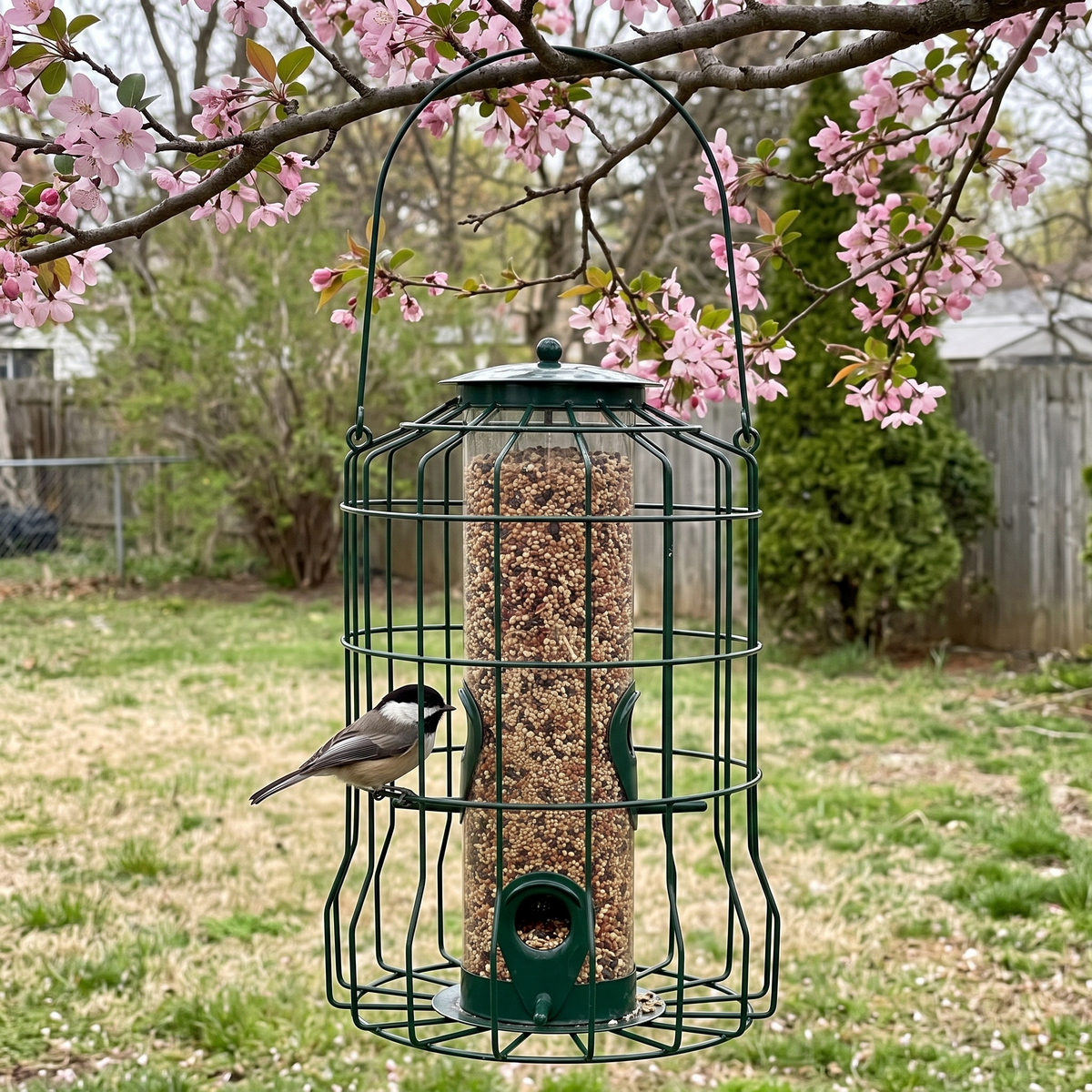
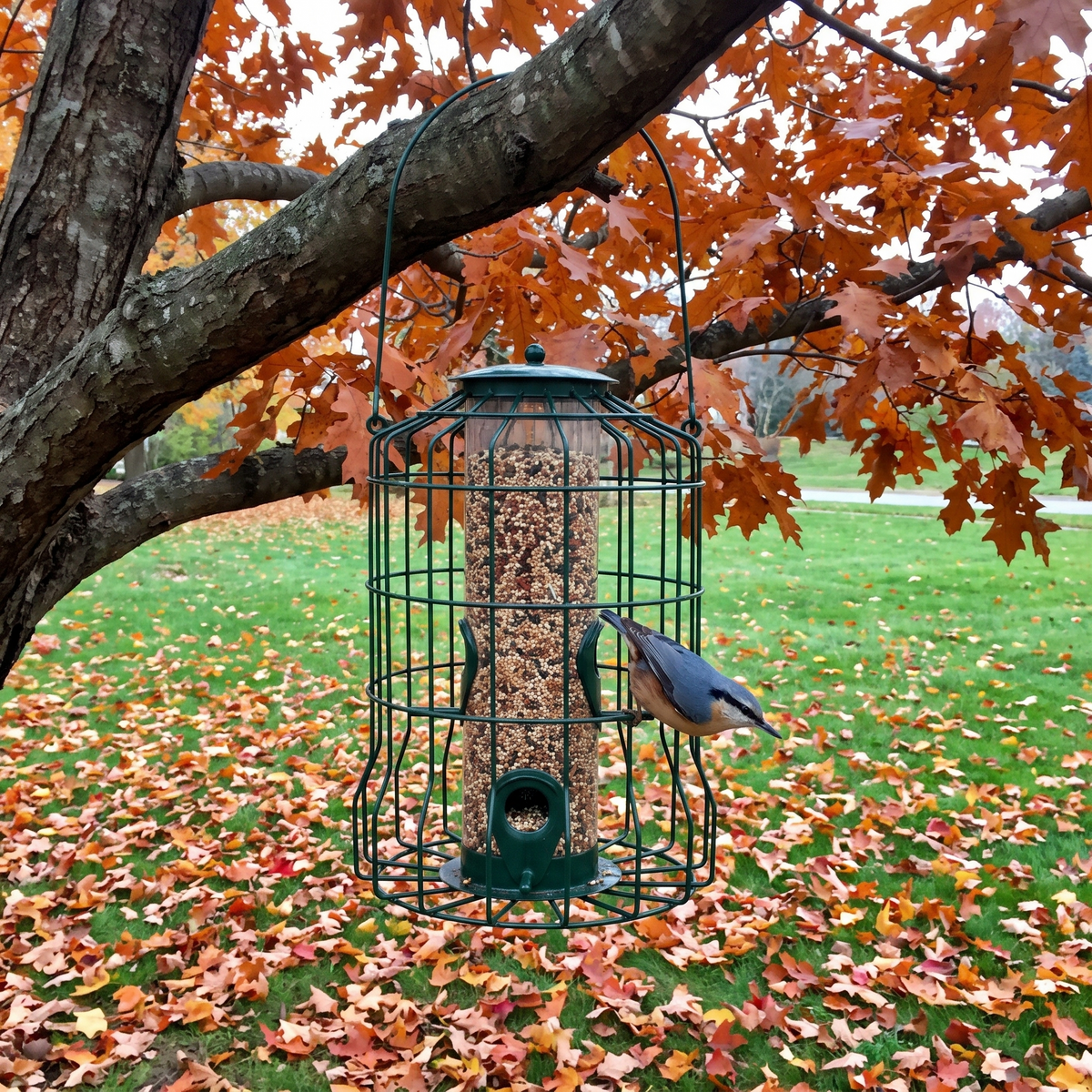
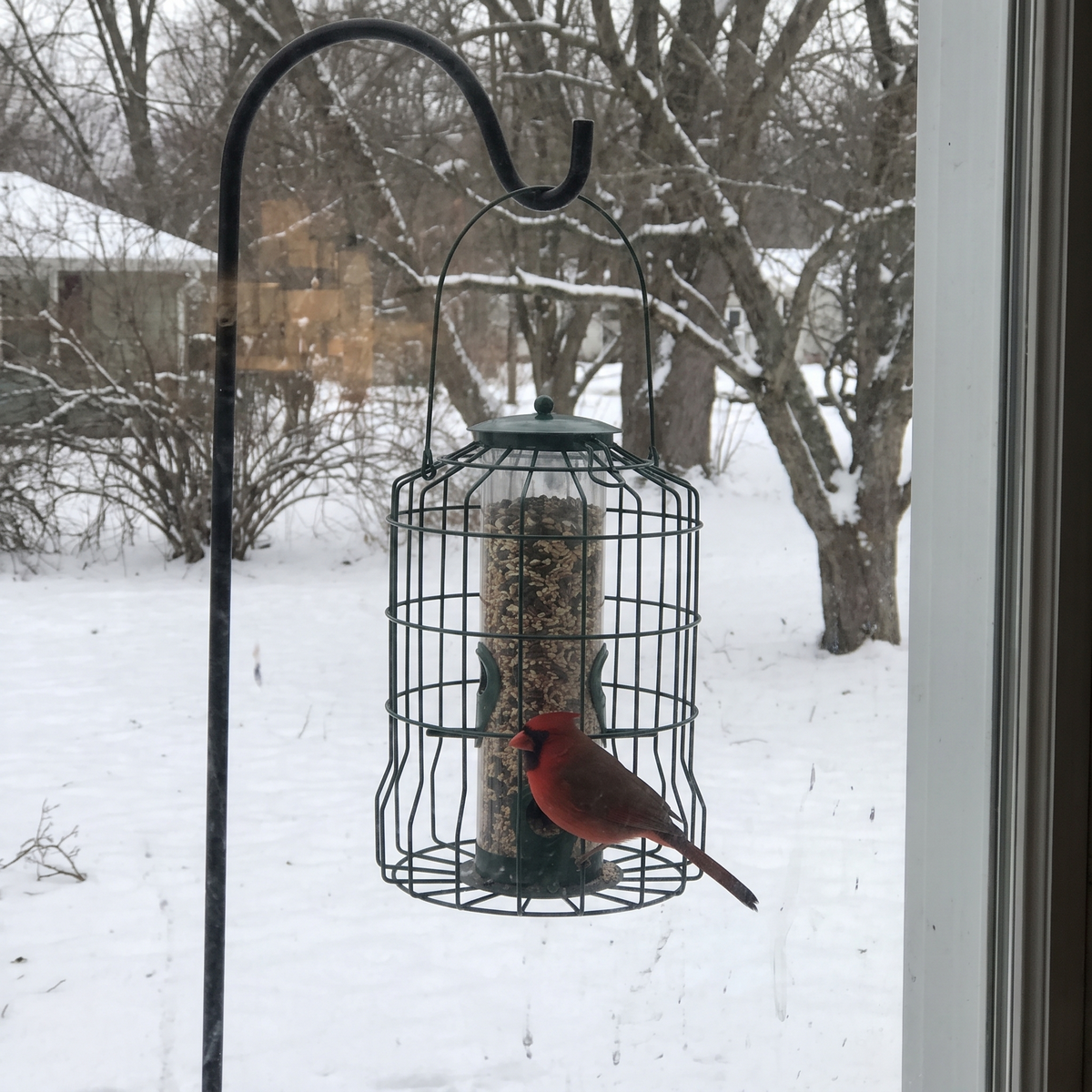
Cage spacing keeps squirrels out
Four ports, so several birds feed at once
All metal build that will not be chewed
Free shipping on every order
30 day returns on everything we sell
Email and phone support from our team
Secure checkout with encrypted payment
If you feed birds, you already have a squirrel problem. You filled the feeder on Saturday morning. By Saturday afternoon it was empty, and there were no birds anywhere near it.
And it is not only squirrels. Grackles, starlings and jays arrive in a gang, clear the ports, and the chickadees and finches you actually wanted sit in the hedge waiting for a gap that never comes. You end up buying seed twice as often to feed the animals you were trying to avoid.
Why this one keeps them out — and why that matters
Most "squirrel-proof" feeders are mechanical. They use a weight-triggered perch, a spring-loaded shroud or a motorised spinner — something that senses a heavy animal and reacts.
Anything with moving parts has two weaknesses. It wears out, and it gums up — springs stiffen in the cold, mechanisms jam when wet seed and dust get into them, and a feeder that is stuck open is just a feeder. And squirrels are persistent problem-solvers; given enough attempts they work out how to hold still, hang upside down, or trip the mechanism from an angle it was not designed for.
This one has no mechanism at all. It uses geometry.
An outer metal cage surrounds the seed tube, with bar spacing chosen so that a small songbird passes straight through and a squirrel's body simply does not fit. There is nothing to defeat, because there is nothing that reacts. A gap is a gap on day one and on day one thousand, in the rain, in the snow, and after a thousand attempts.
Why a squirrel can't squeeze through a gap a mouse would manage
This is the part that makes the cage work, and it is worth knowing because it sounds like it should be beatable.
People assume any small mammal can compress itself through a tight gap. Mice and rats genuinely can — they have slim, flexible collarbones and can collapse their shoulders inward to follow their skull through a hole.
Squirrels are built differently. They are climbers, not burrowers. Their entire skeleton is built for gripping and leaping, which means broad shoulders, a deep ribcage and strong, wide-set limbs. A grey squirrel's shoulder span is several times that of a chickadee's, and crucially it is rigid — it is a bone structure, not a soft one, so it cannot be squeezed down to fit. The head may go through the bars. The body behind it physically will not follow.
Songbirds are the opposite. A chickadee or goldfinch weighs about as much as a few sheets of paper, and most of its apparent size is feathers, which compress to nothing. Its actual body is tiny, narrow and light, and it can flatten its plumage and slip through a gap that looks far too small for it — then fluff back up on the other side.
So the bar spacing is not a compromise or a deterrent. It is a hard physical sort that separates animals by skeletal width, and it happens to land exactly between the birds you want and the animals you do not — which also catches grackles, starlings and jays, since they are simply bigger-bodied birds.
There is no behaviour that gets around a bone structure. That is why a cage keeps working for years while a weight-triggered feeder is eventually outsmarted.

The material is the other half of it
Squirrels do not only steal seed — they chew their way in. A plastic feeder gets gnawed open at the ports within a season, and then it leaks seed and rain.
This is a metal structure with a PC tube. Squirrels can chew plastic. They cannot chew through steel bars, so they never reach the tube to start. That is why this lasts through winters rather than months.
The details that affect whether birds actually come
- 4 feeding ports, so several birds feed at once. One-port feeders create a queue, and birds that have to wait go elsewhere
- Standing rods at each port — small birds grip and perch like a branch rather than hovering, which is what makes them settle and stay long enough for you to watch them
- A wide opening that keeps seed dry. Damp seed grows mould and birds will not touch it, which is the quiet reason many feeders sit full and ignored
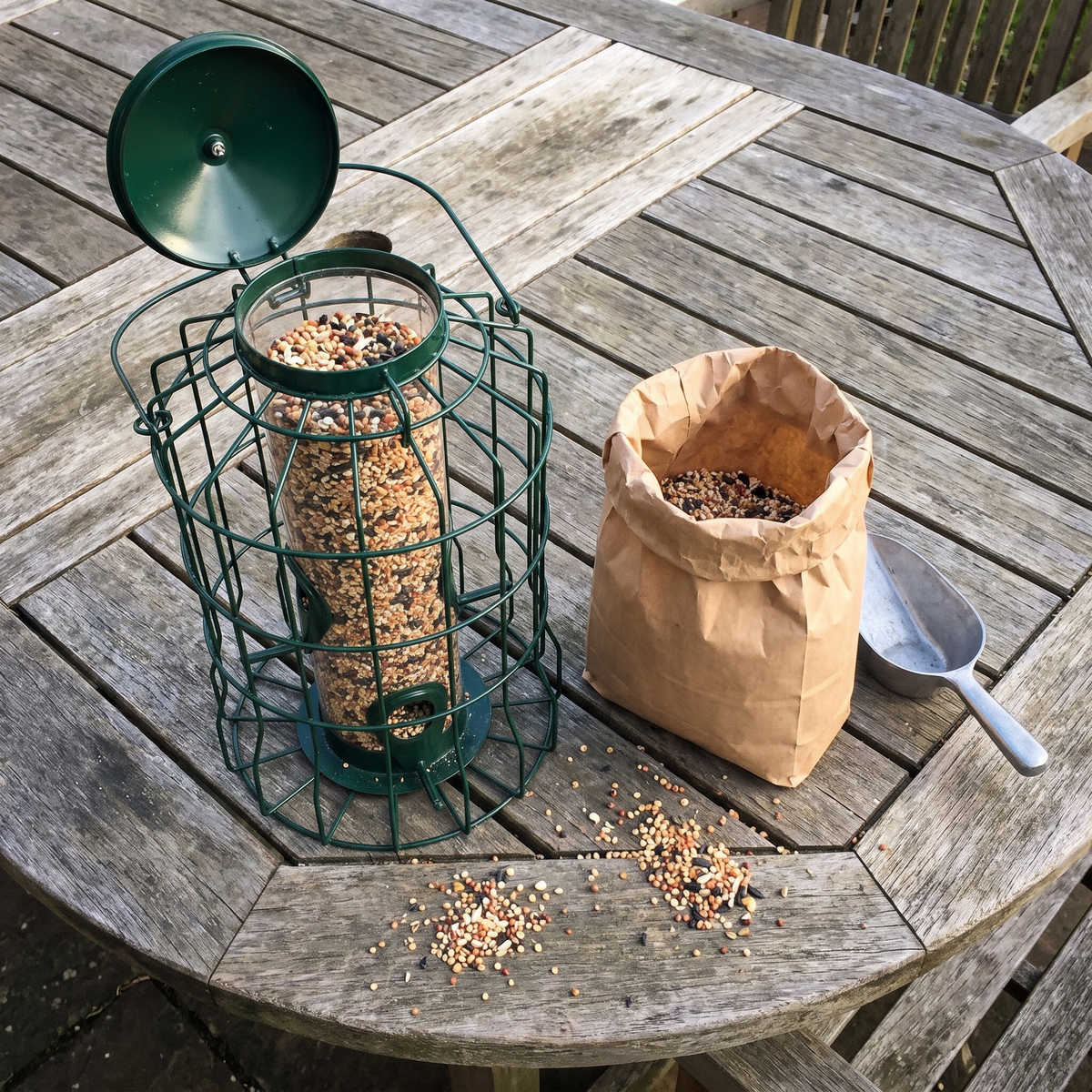
- A transparent tube, so you see at a glance when it needs refilling instead of discovering it empty
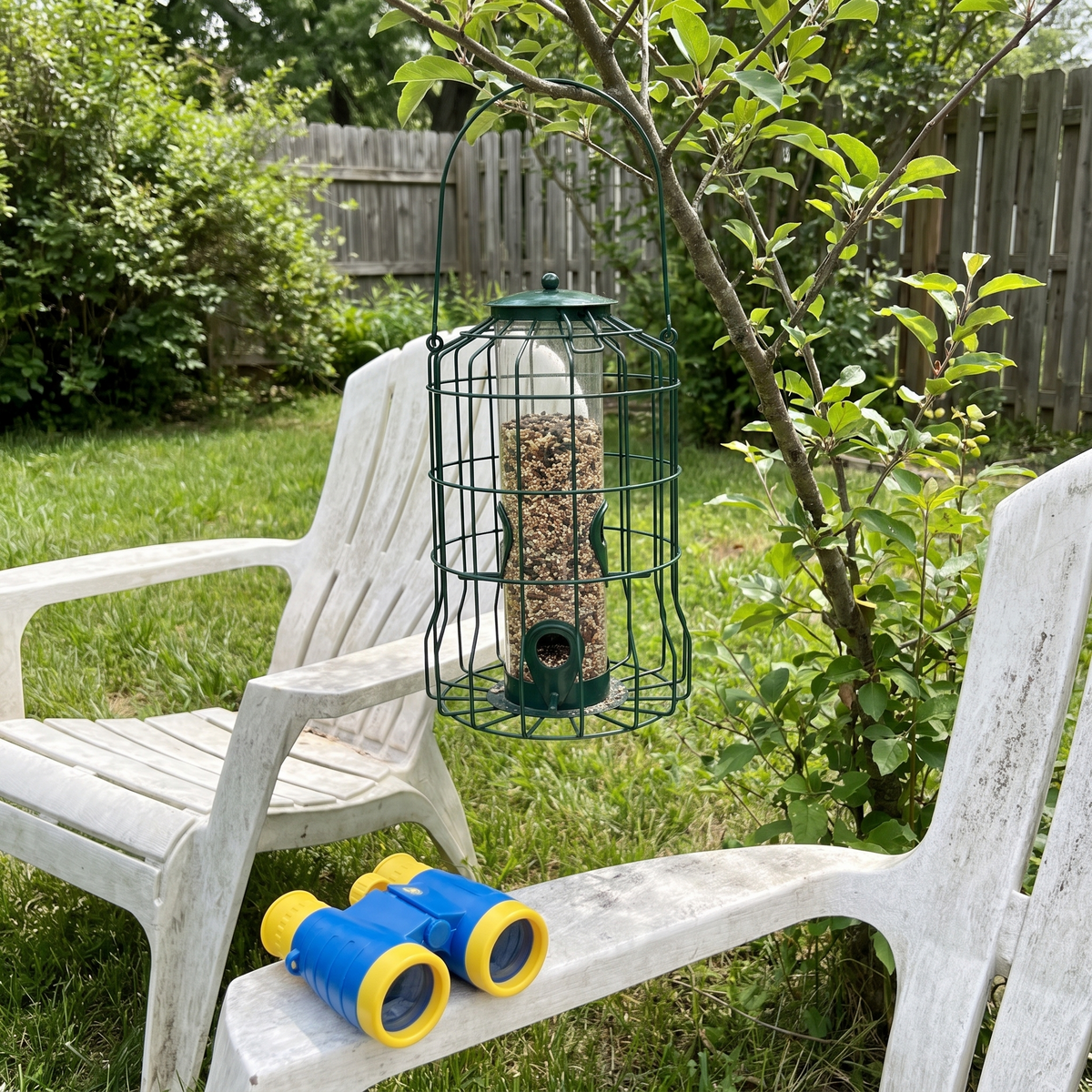
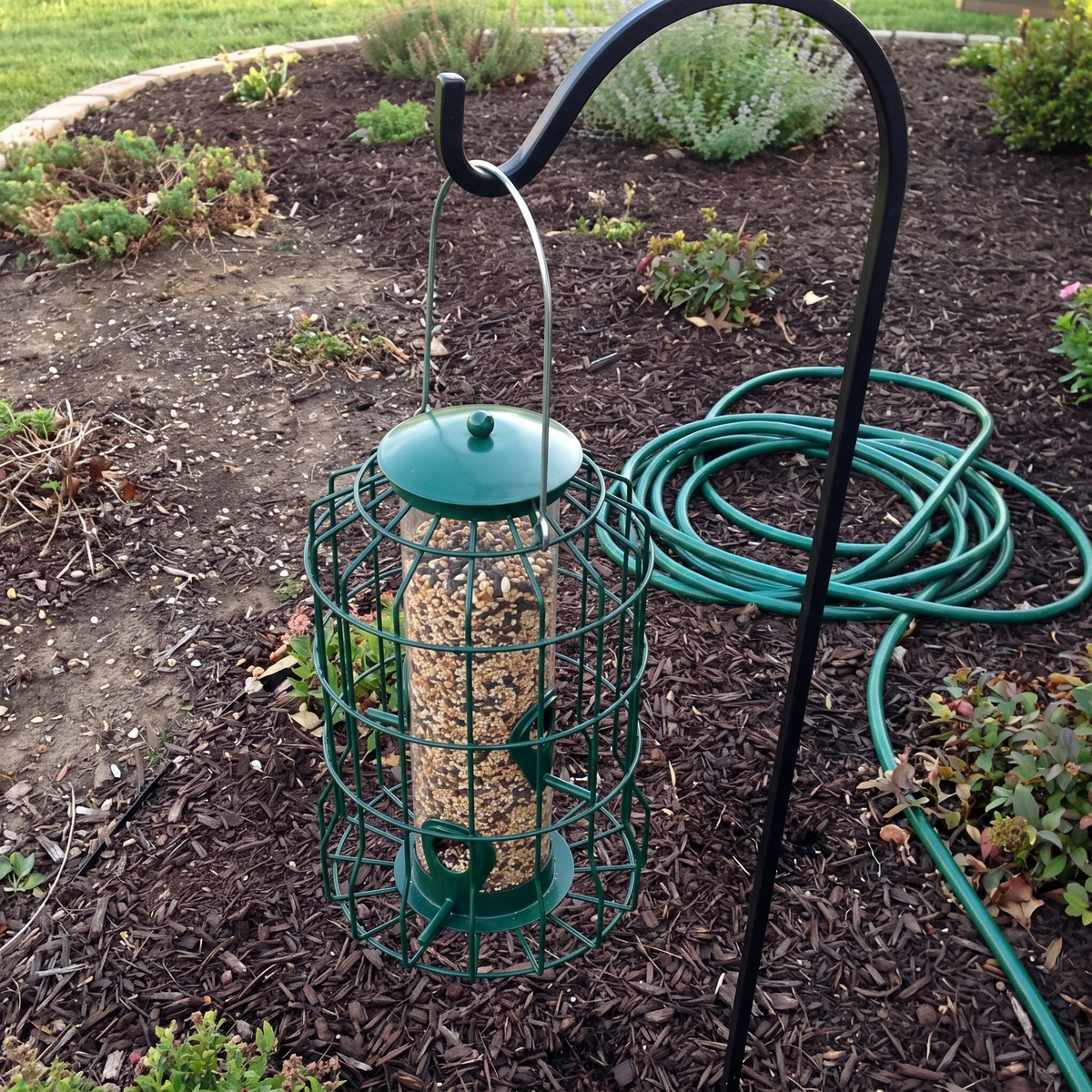
- Hang it or stand it — a handle for a branch, hook or bracket, and a flat platform base for a table, railing or wall top
- 17 x 17 x 25 cm (6.69 x 6.69 x 9.84 in), which is big enough to hold a few days of seed and small enough for a balcony or a modest garden
Why it is one of the best gifts for a certain kind of person
Bird watchers are difficult to buy for because the hobby has almost no equipment — binoculars, a book, and then what?
A feeder is the exception, and this one is the right version of it. It gets mounted somewhere visible from the kitchen window, and then it is used every single day, passively, for years. Most gifts are opened once. This one puts something new outside the window every morning.
It lands particularly well with parents and grandparents, anyone recently retired, anyone who has just moved somewhere with a garden, and anyone recovering or housebound who spends a lot of time looking out of one window. It is also an easy one for a child to help fill and watch.
How to use
- Open the top lid and fill the tube with seed. Small seeds such as sunflower hearts, nyjer and mixed songbird seed suit the port size best.
- Hang it by the handle, or stand it on a flat surface using the platform base.
- Place it at least 10 feet from a fence, roof or branch a squirrel could leap from, and within sight of cover so birds feel safe approaching.
- Refill when the level in the clear tube drops. Give it one to two weeks — birds take time to find a new feeder.
Care and tips
Empty and clean the tube every few weeks and let it dry before refilling; this is the single biggest thing you can do for the health of the birds visiting it. Iron and PC handle rain, wind, snow, heat and frost, so it stays out all year.
Specifications
- Type: Outdoor squirrel-proof caged seed feeder
- Material: Iron and PC
- Colour: Green
- Feeding ports: 4, with standing rods
- Size: 17 x 17 x 25 cm (6.69 x 6.69 x 9.84 in)
- Weight: 323 g (0.71 lbs)
- Mounting: Hanging handle or flat platform base
What's included
- 1 x outdoor squirrel-proof bird feeder
Free shipping on every order
Shipping is free on everything we sell, with no minimum order. You will receive tracking by email as soon as your order is dispatched.
If something is not right, you can return it within 30 days of delivery. Get in touch by email or phone and we will sort it out.





Songbirds In, Squirrels Out

What Comes in the Box
