


2nd item 15% off · 3rd item 20% off
Come Back & Save
2nd order 15% off · 3rd order & beyond 20% off
Savings are shown as one discount across your cart. Offers can't be combined; you'll automatically get the best one. Use the same email each time you check out (or sign in) to unlock returning-customer savings.
Solar Rechargeable Camping Lamp
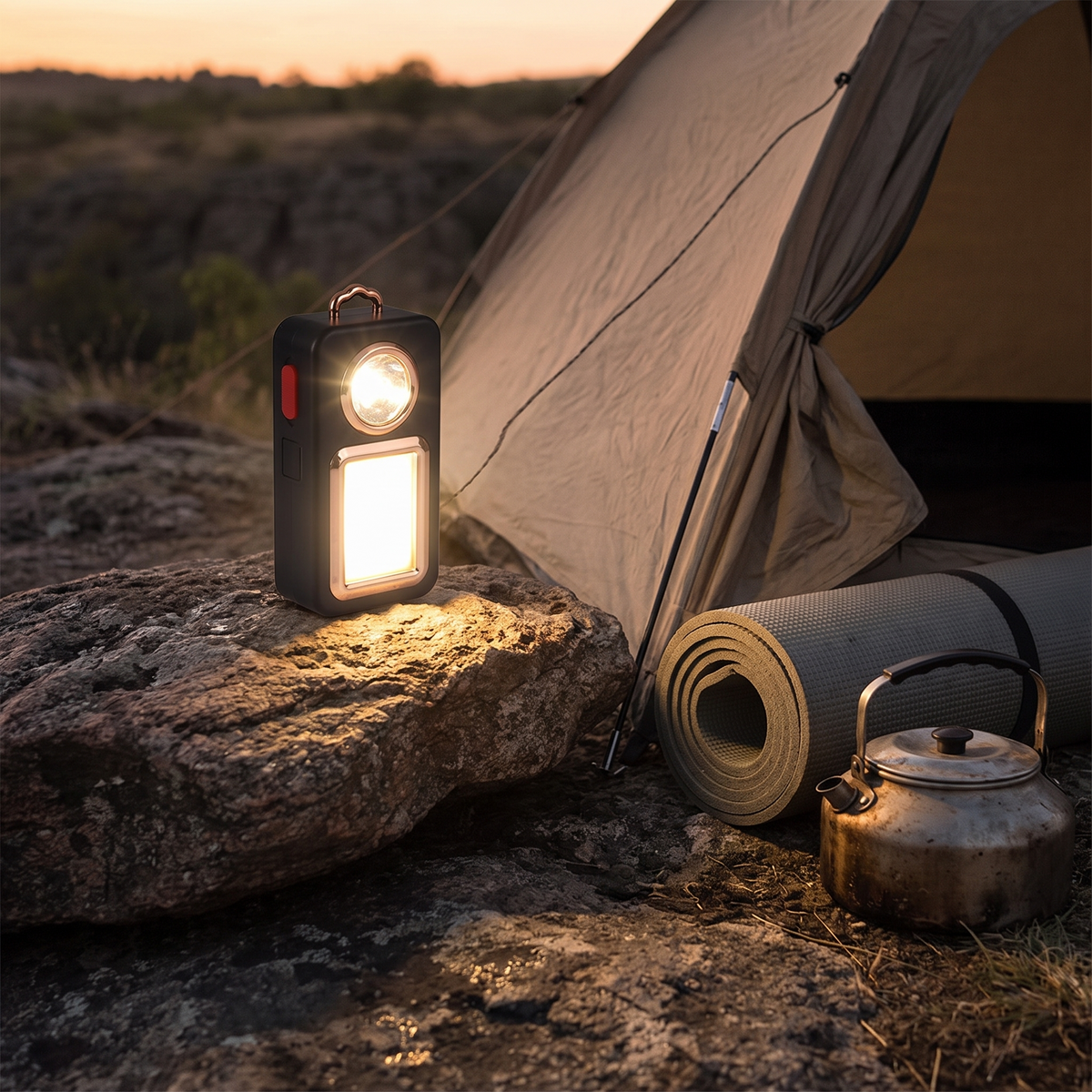
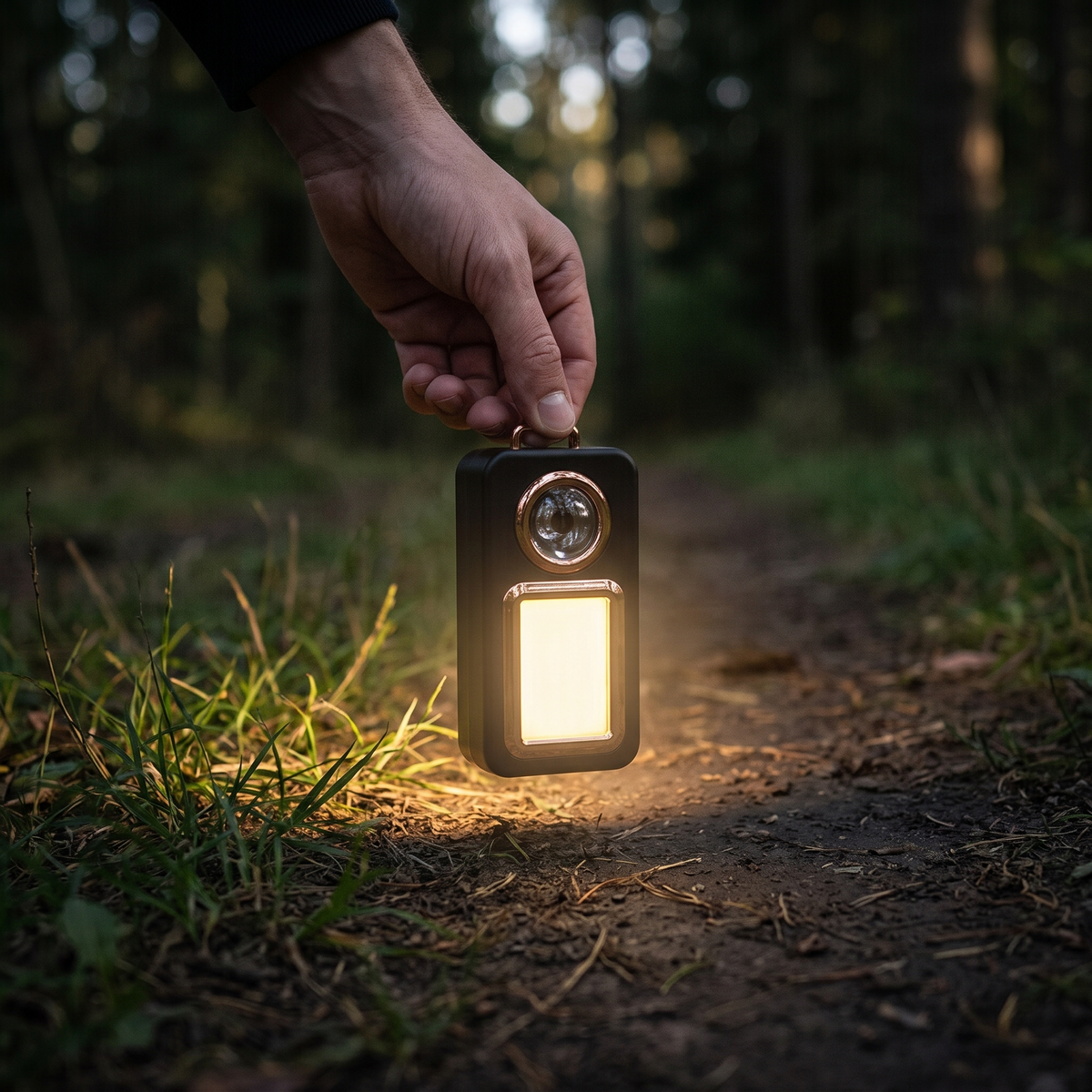
Beam for the path, flood for the tent
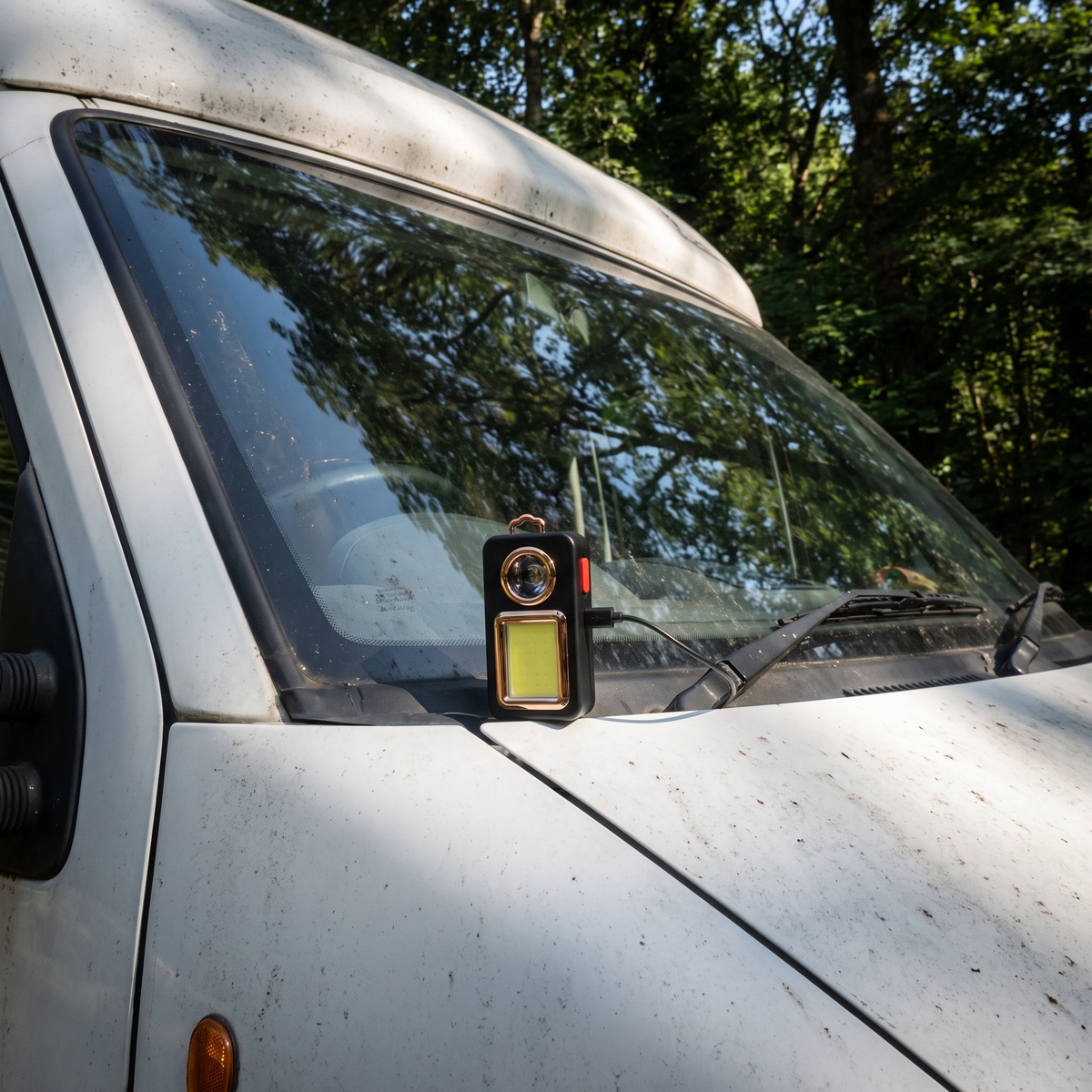
Solar top up plus USB when in a hurry
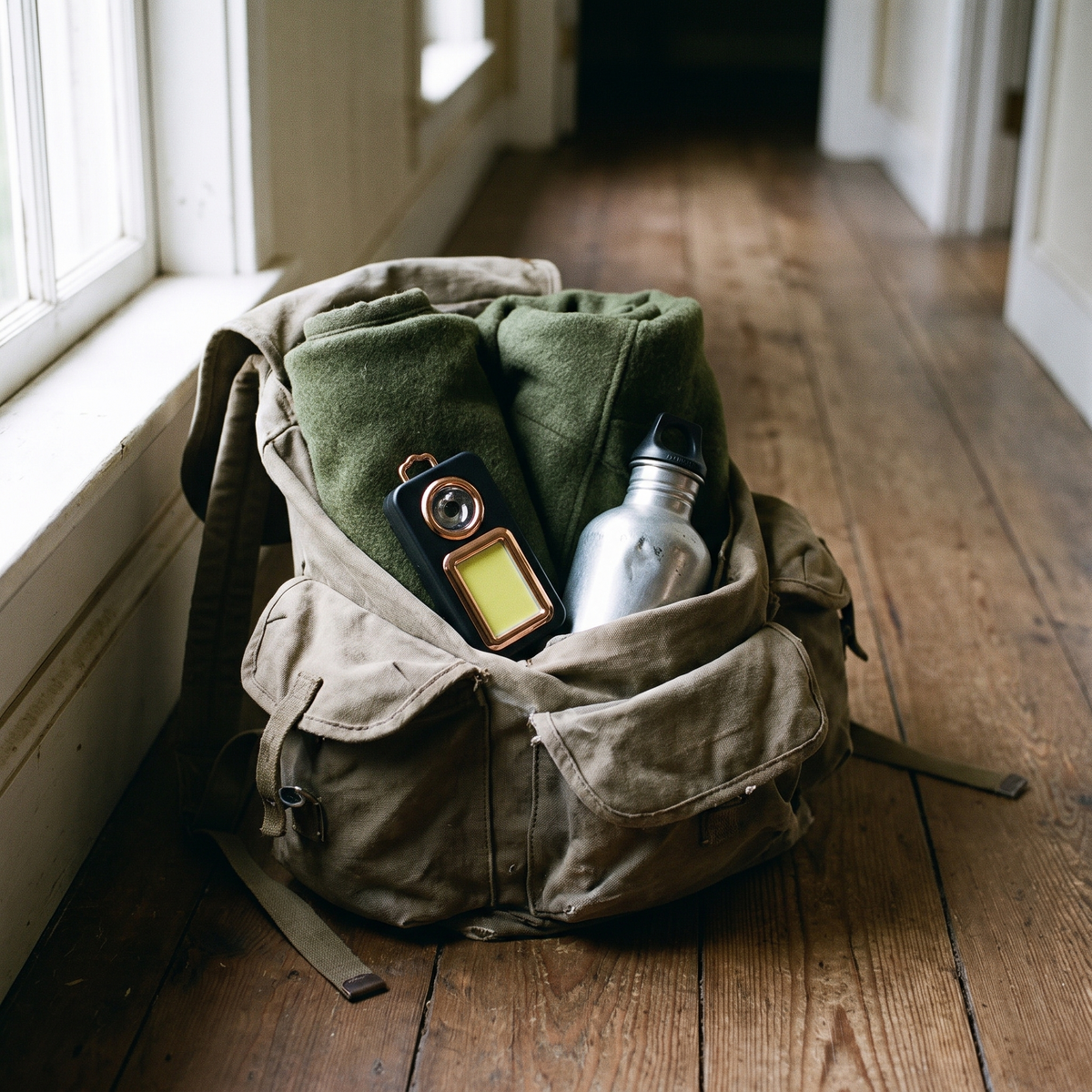
Fits in a pocket or a glovebox
Free shipping on every order
30 day returns on everything we sell
Email and phone support from our team
Secure checkout with encrypted payment
Anyone who has camped knows this problem, even if they have never put words to it. You are at the tent at night with one light, and that one light is always wrong.
If it is a torch, it throws a hard circle onto whatever you point it at and leaves everything else black — fine for finding the path, useless for cooking, and it blinds whoever you turn to talk to. If it is a lantern, it glows nicely over the table and then shows you almost nothing when you walk twenty feet to find the toilet block.
So people carry two lights. Or they carry one and spend the trip annoyed.
Why two light sources in one body actually matters
This has a spot LED and a COB flood panel, each on its own switch. They are not two brightness settings of the same lamp — they are two genuinely different optics, because the two jobs need opposite things.
- The spot LED is collimated. A lens gathers the light into a narrow cone and throws it a long way. That is what you want for distance — a path, a tree line, a dropped tent peg forty feet away. It works because it is concentrated.
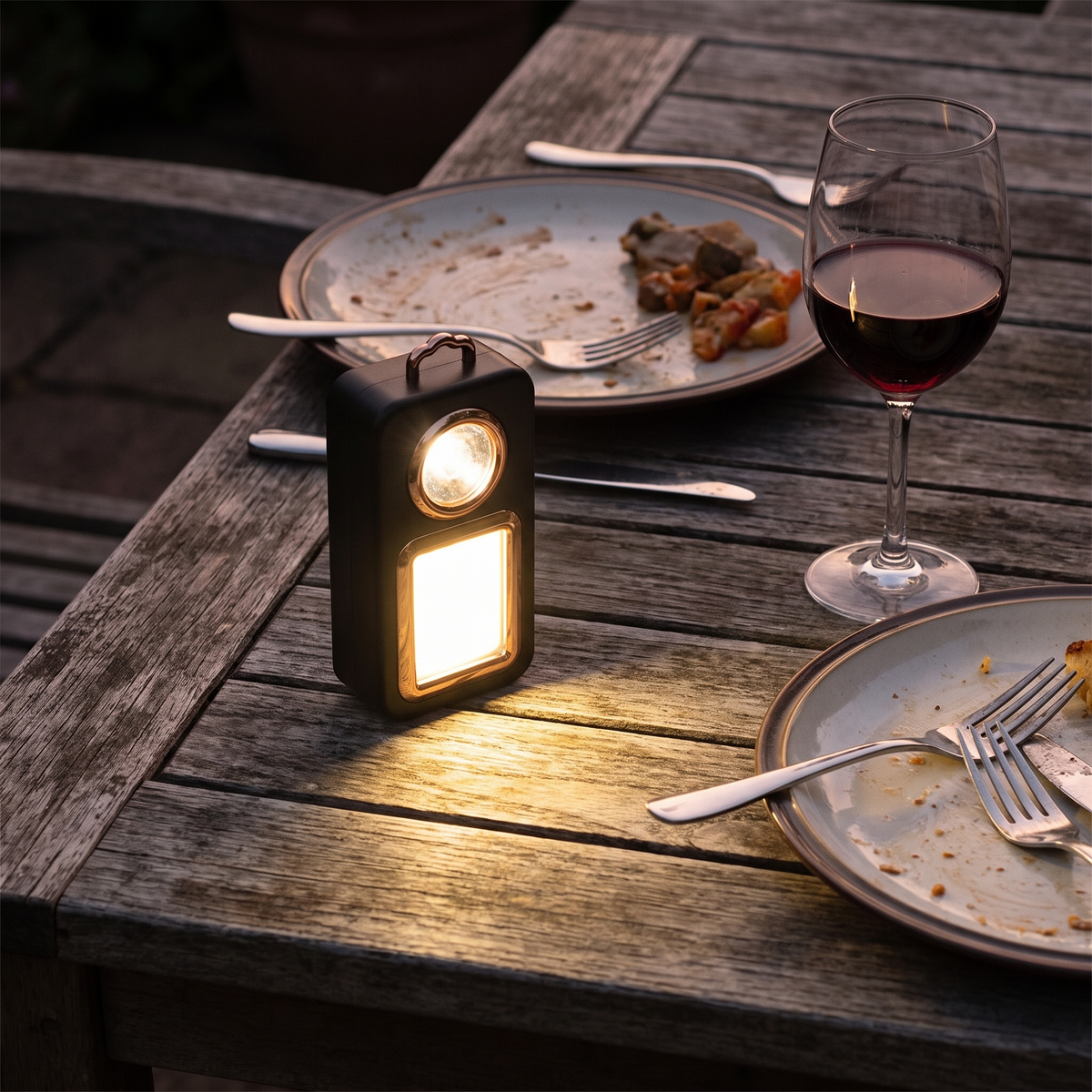
- The COB panel is the opposite. COB means a grid of LED chips bonded directly onto one board, which gives you a large glowing surface instead of a bright point. A big emitting area means soft, even, wide light with almost no harsh shadow — right for a tent interior, a table, a camp kitchen, reading, or finding something in a bag.
Why the same 250 lumens looks completely different through each one
This is the part worth understanding, because it explains why you cannot simply turn one up to do the other's job.
Lumens measure total light leaving the lamp. They say nothing about where it goes. What your eye actually responds to is how much light lands on a given patch of surface — and that depends entirely on how wide the beam is spread.
Squeeze 250 lumens into a narrow 10-degree cone and all of it piles onto a small area. That patch is intensely bright, and because the beam barely spreads, it stays usefully bright a long way out. That is throw.
Spread the same 250 lumens across a 120-degree flood and it covers more than a hundred times the area. Any given patch gets a small fraction of the light — gentle and even up close, and effectively nothing at thirty feet, because the beam keeps widening as it travels.
So the two modes are not strong and weak. They are the same quantity of light, packed densely or spread thinly, and each is useless at the other's job. A spot used as a room light gives you a searing disc and black edges. A flood used for distance just lights the air in front of you.
That is why having both on separate switches genuinely replaces two lights, and why 250 lumens from 3W is the sensible number here — bright enough to be useful in both modes, modest enough that a 1200 mAh cell gives you real runtime instead of fifteen glorious minutes.

The size is the point
At about 145 g it is roughly the weight of a phone. That is light enough that it stays in the bag permanently rather than being packed for trips. The lights you actually have with you are the small ones.
And the solar panel means it is quietly topping itself up on a windowsill or clipped to a pack, so it is rarely found completely dead — the usual fate of a torch that lives in a drawer.
Straight about the solar
Solar is a top-up, not a fast charge. USB gets it full in about 3 hours; daylight keeps it from going flat. Runtime is roughly 2 to 4 hours depending on which light you run, so charge it by USB before any trip you are depending on it for and let the sun handle the rest.
How to use
- Charge by micro USB before your first use. A full charge takes around 3 hours.
- Press up for the narrow LED beam, press down for the wide COB flood.
- Leave the panel facing daylight between uses to keep it topped up.
Specifications
- Light sources: LED spot and COB flood
- Output: 3W, about 250 lumens
- Colour temperature: 6500 to 7500K cool white
- Battery: 18650, 1200 mAh
- Charging: Solar panel and micro USB, about 3 hours to full
- Runtime: About 2 to 4 hours
- Material: ABS
- Colour: Black
- Weight: About 145 g
Shipping note
This item ships within the mainland United States only. It cannot be sent to Alaska, Hawaii, Puerto Rico, Guam, the US Virgin Islands, American Samoa, APO or FPO addresses.
What's included
- 1 x camping lamp
- 1 x micro USB charging cable
Free shipping on every order
Shipping is free on everything we sell, with no minimum order. You will receive tracking by email as soon as your order is dispatched.
If something is not right, you can return it within 30 days of delivery. Get in touch by email or phone and we will sort it out.

Two Lights in One Pocket

What Comes in the Box
