


2nd item 15% off · 3rd item 20% off
Come Back & Save
2nd order 15% off · 3rd order & beyond 20% off
Savings are shown as one discount across your cart. Offers can't be combined; you'll automatically get the best one. Use the same email each time you check out (or sign in) to unlock returning-customer savings.
Orthotic Arch Support Insoles
Real arch support, not flat foam
Deep heel cup keeps your foot seated
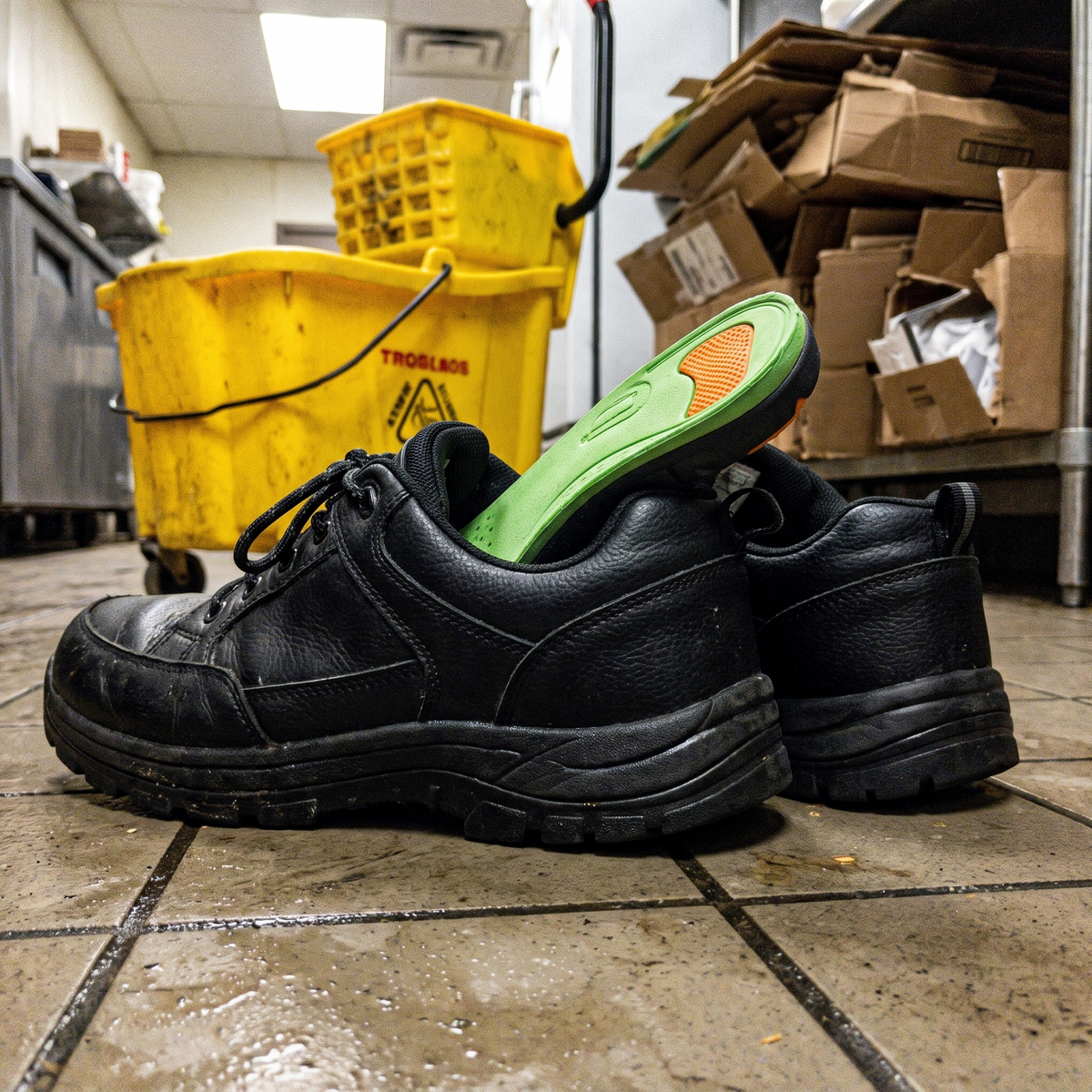
Built for long shifts on hard floors
Free shipping on every order
30 day returns on everything we sell
Email and phone support from our team
Secure checkout with encrypted payment
You know the shape of this problem because you live it. The first steps out of bed are the worst ones of the day. By mid-afternoon your feet ache, by the end of a shift your lower back has joined in, and the arches of your shoes have flattened into something that supports nothing at all.
You have probably already tried the cushioned gel insoles from the pharmacy. They felt great for about a week. Then they packed down to a thin wafer and you were back where you started, out another twenty dollars.
Why cushioning fails and structure doesn't
This is the distinction almost nobody selling insoles makes clear.
Cushioning absorbs impact. Structure changes load. Foam has one job — to compress. That is how it softens a footfall, and it is also why it stops working: you weigh what you weigh, and after a few hundred thousand steps the cells in the foam have collapsed and it cannot compress any more. A soft insole is a product with a built-in expiry date.
These are built around a TPU shell — a thermoplastic that is rigid enough to hold its shape under full bodyweight but flexible enough to move with the foot. The 1.38" arch is still 1.38" after months of wear, because the material is not relying on compression to do its job. That is the whole difference between support and padding.
Why your foot is an arch in the engineering sense
Worth understanding, because it explains why the support has to go under the middle and why softer is not better.
The bones of your midfoot form a genuine arch — the same structure as a stone bridge. An arch is strong because weight pressing down on top gets redirected outward and down through the curve to the supports at each end. That is how a bridge made of loose blocks carries a truck.
But every arch has one requirement: the ends must not be allowed to spread apart. A bridge has abutments doing that job. In your foot, the job is done by soft tissue running along the sole from heel to toes, holding the two ends together like a bowstring.
Every step you take, your bodyweight presses down on that arch and tries to flatten it, which pulls those two ends apart — and that soft tissue takes the strain. Thousands of times a day, on hard flat floors, in shoes with no shape in them.
Now the difference becomes obvious. Foam under an arch does nothing, because it simply compresses out of the way under load; the arch flattens exactly as far as it would have. A rigid support physically fills the space under the curve, so the arch meets something solid before it can flatten. Less flattening means less spreading, which means less strain carried by the soft tissue — and that is why people notice it at the end of a long day rather than in the first ten minutes.
It is also why the shell has to be firm. A support that gives way under your weight is not a support; it is a cushion in a different shape.

What the three contact points actually do
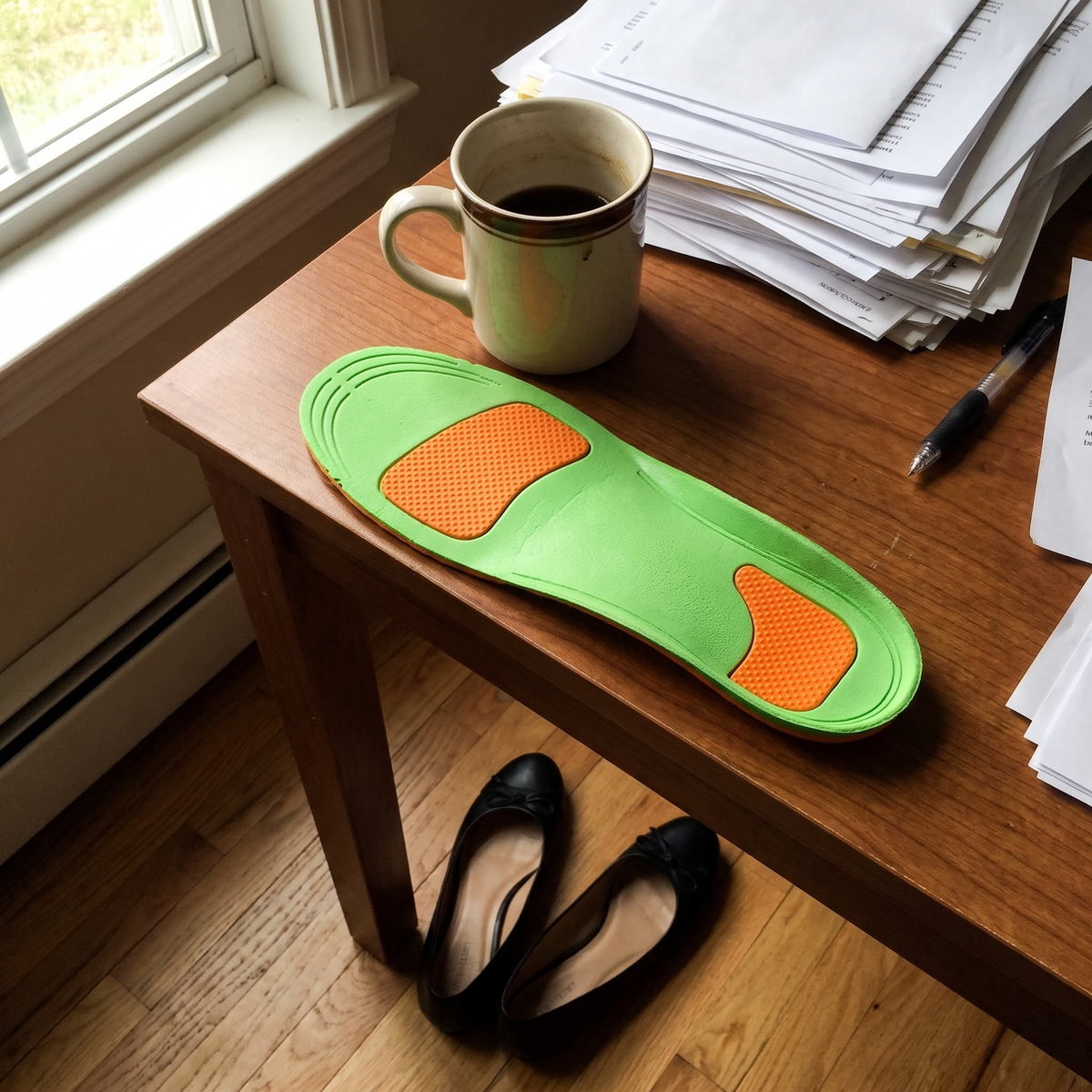
A flat insole touches your foot everywhere and supports it nowhere. A 3-point support design loads the foot at the places that carry it:
- The arch — fills the gap under the midfoot so the arch is held rather than flattening out with every step.
- The heel — a U-shaped cup that wraps the heel rather than sitting flat under it. Underneath your heel bone is a natural pad of fat that acts as a shock absorber. On a flat surface it spreads sideways on impact and thins out. A cup walls it in so it stays compressed under the bone where it is useful.
- The forefoot — supports the ball of the foot, where pressure concentrates at push-off.
Built to be worn all day, not just felt once
The top layer is BK cloth over PU foam — breathable and sweat-absorbent, which matters more than it sounds. The reason people abandon rigid orthotics is not the support, it is that their feet get hot and damp inside a work boot by hour six.
- Five sizes (XS to XL), so you get the arch sitting in the right place rather than making one length fit everything
- Three colours — green, orange and black
- Soft, elastic, breathable, sweat-absorbent, wear-resistant and durable construction
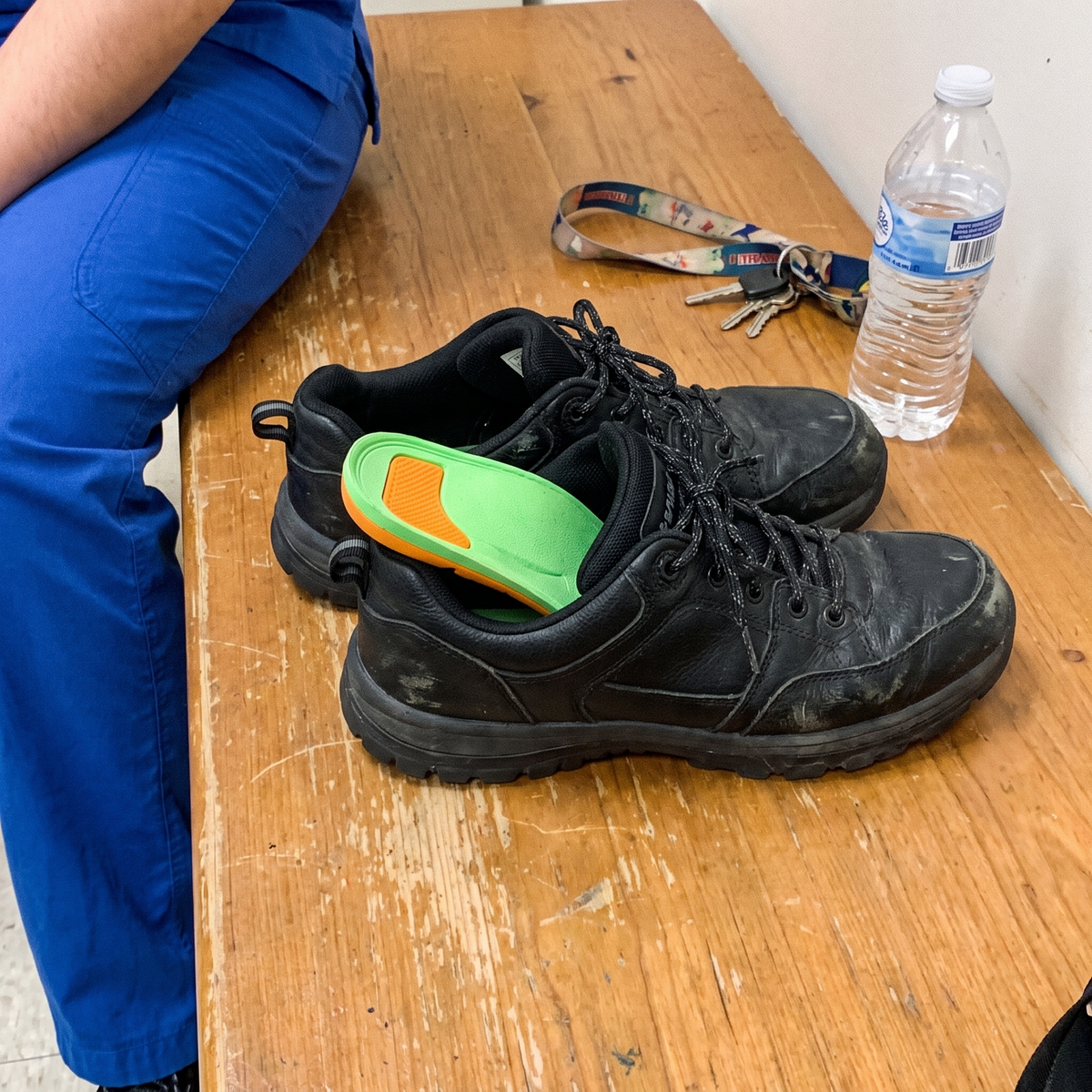
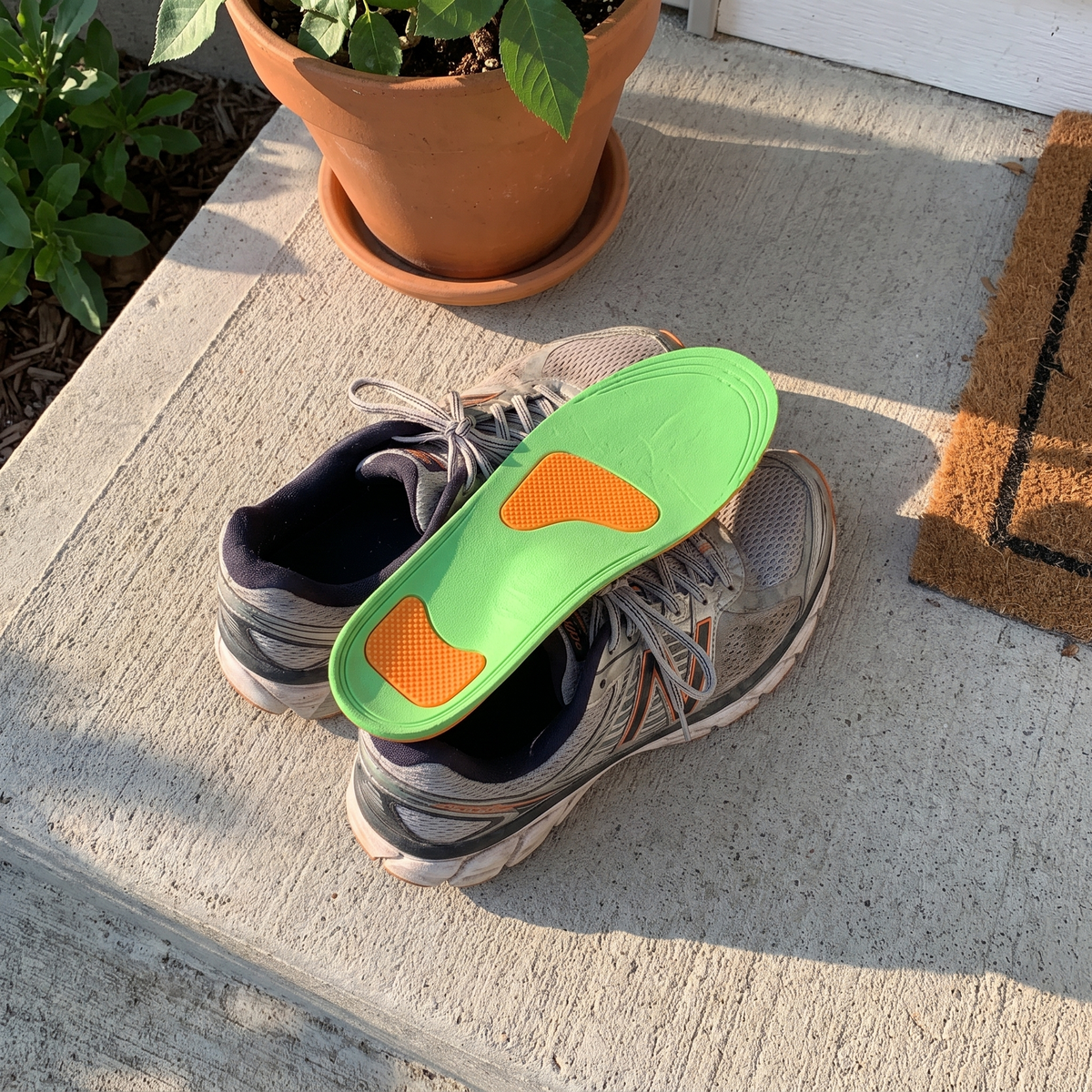
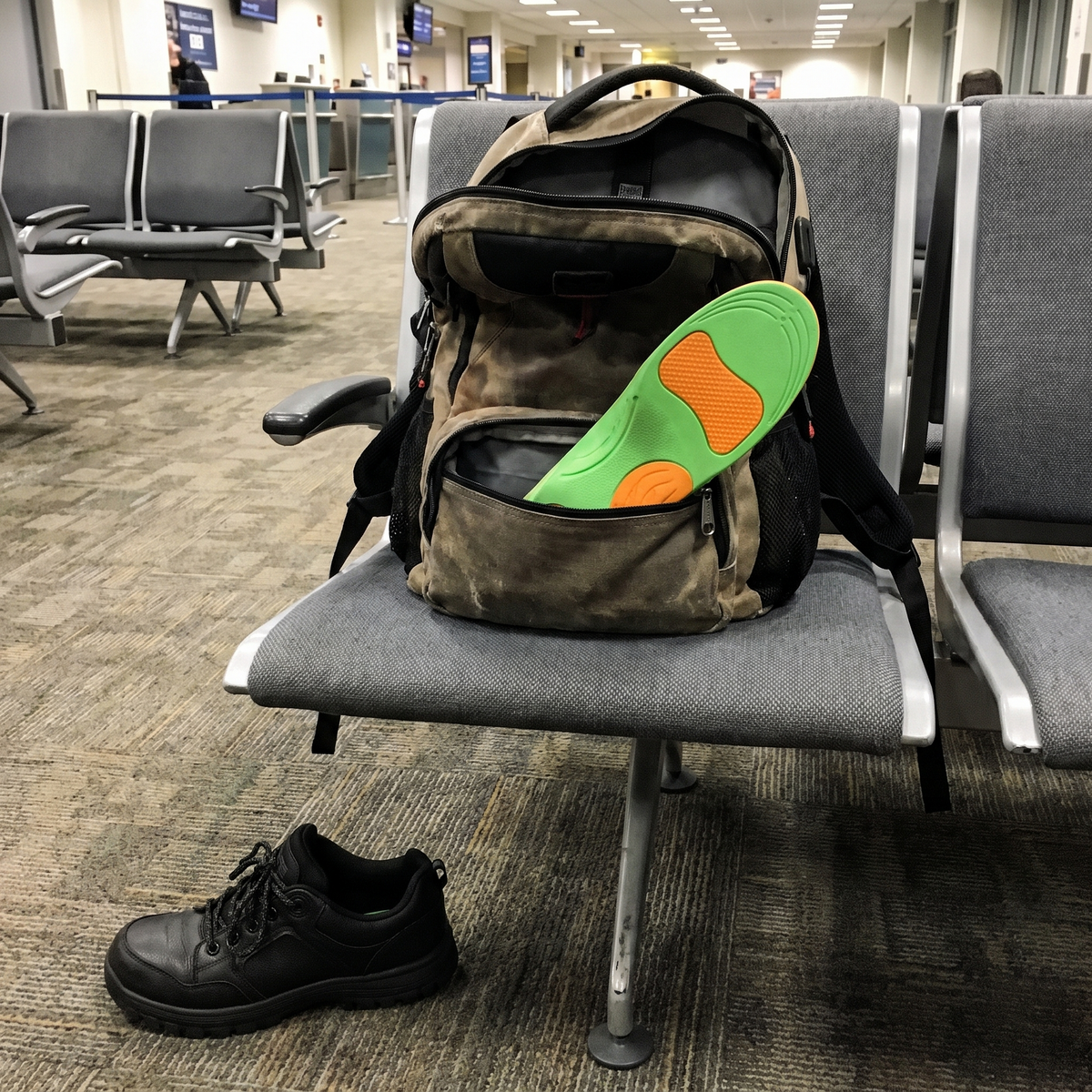
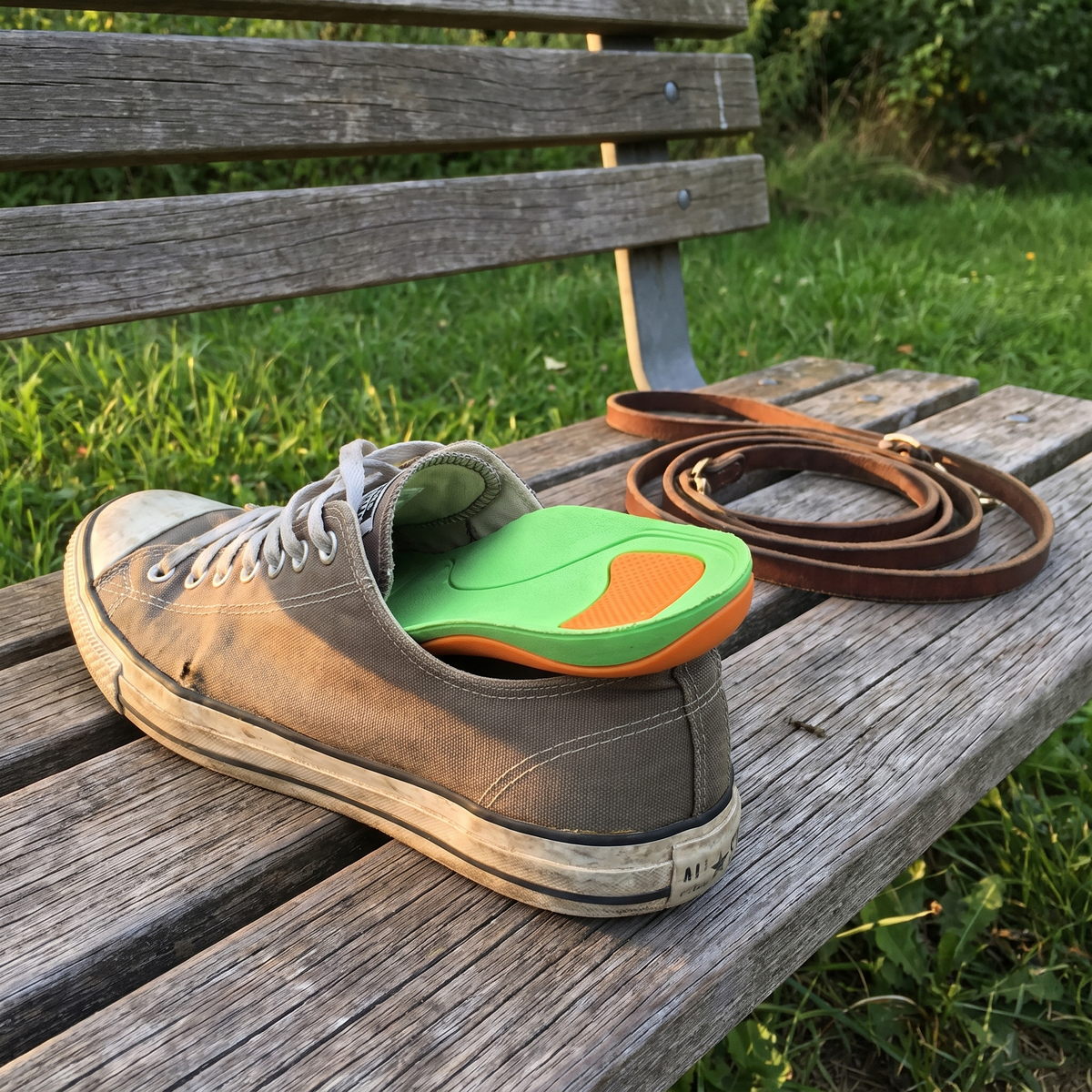
- Suits work boots, trainers, walking shoes and everyday footwear with a removable liner
Who these are for
People who stand for a living — nurses, hospitality, retail, warehouse, trades, teachers. Walkers and runners who feel it in the arch. Anyone with flat feet or high arches, both of which leave the midfoot poorly supported in standard shoes. And anyone whose foot discomfort is quietly turning into knee, hip or lower-back ache, because the foot is the first joint in that chain.
How to use
- Take the existing liner out of the shoe and use it as a template — trim the insole to match if needed.
- Fit the new insole with the heel cup seated firmly at the back of the shoe.
- Wear them for 2 to 3 hours a day for the first week. Structured support repositions the foot, and it takes a few days to adapt. Going straight to a full day is why some people give up on them.
Good to know
These are comfort and support insoles, not a custom medical orthotic and not a treatment. If you have persistent or severe foot pain, diabetes, reduced circulation in your feet, or a diagnosed foot condition, speak to a doctor or podiatrist about what is appropriate for you before changing your footwear setup.
Specifications
- Colours: Green, Orange, Black
- Materials: BK cloth, PU foam, TPU
- Arch height: 1.38"
- Design: U-shaped heel cup, 3-point support
- Sizes: XS / S / M / L / XL


Free shipping on every order
Shipping is free on everything we sell, with no minimum order. You will receive tracking by email as soon as your order is dispatched.
If something is not right, you can return it within 30 days of delivery. Get in touch by email or phone and we will sort it out.




Your Shoe Is Doing Less Than You Think

What Comes in the Box
